Beginner's Guide to Identifying Small Coastal Boats
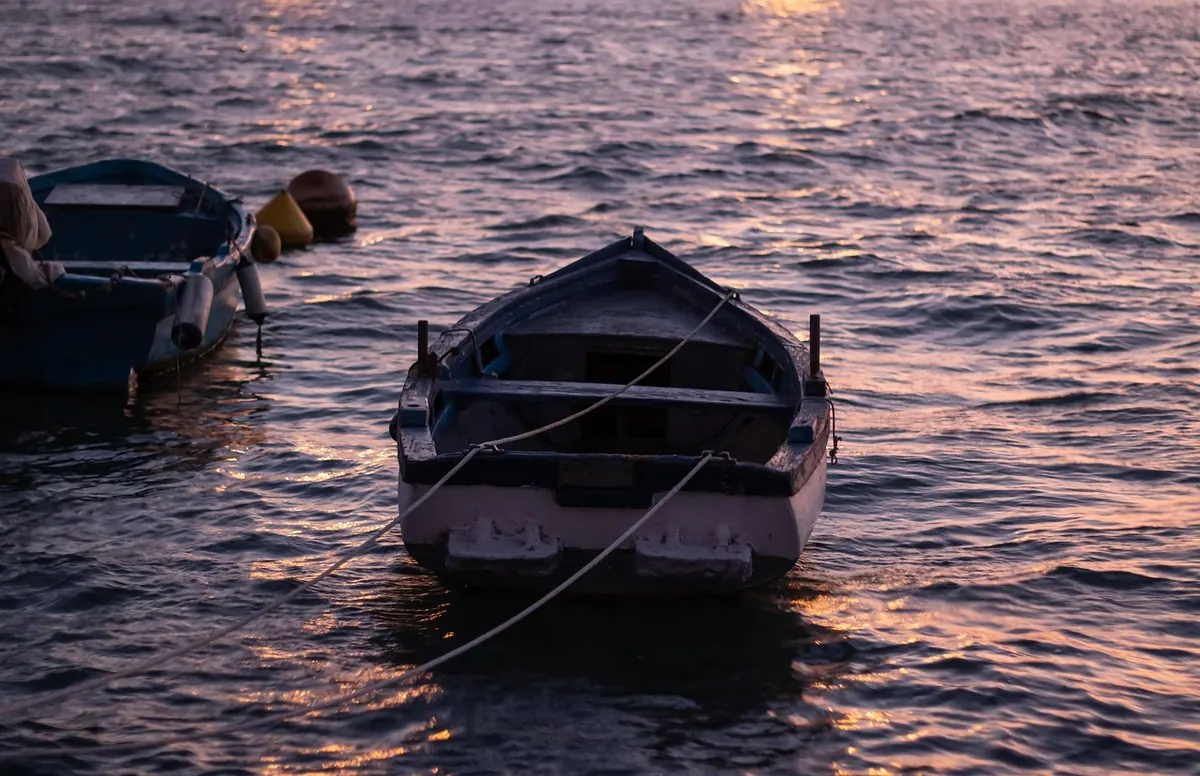
Walk along a working quay an hour before the light goes, and the boats start to sort themselves out. A fat-bowed tender noses in with supplies. A bright double-ender sits under a tarp, paint fading at the gunwale. Three white sloops swing on their moorings like they were parked in a row. Most people glance once and keep walking. Learning to read those boats is a slower pleasure, and it takes less time than you'd think to get good at it. You don't need a catalogue memorized. You need three or four habits of looking, a small vocabulary, and the willingness to be wrong out loud for a week.
Begin With the Silhouette, Not the Details
Squint. That sounds like a joke, but it works. Blurring your eyes strips away paint, flags and fenders — the things owners choose — and leaves the shape a designer decided on. From fifty meters, the silhouette is almost everything you've got; from two hundred, it's all you've got.
Ask four questions in order. How many masts? Where is the engine? Is the bow pointed, blunt, or nearly vertical? Does the deck run flat like a table or curve like a shell? The highest point of the boat is a good first clue too: a mast says sail, a canvas canopy says fishing or ferry work, a low console says somebody wants to go fast and get wet.
Hull Shapes: What the Waterline Tells You
Displacement, planing, and the space between
A displacement hull sits in the water rather than on top of it. It usually has a round bilge — no hard corners where the bottom turns up into the side — and often carries its widest point near the middle. These boats push water aside, so they're slow but steady, and their speed is tied to waterline length. Old fishing launches, heavy cruisers and most long-keel sailboats belong here.
A planing hull looks different in one obvious place: the stern. Flat or shallow-V sections aft, a hard chine (a crisp angle running the length of the hull), a wide bottom. Given enough power, the boat climbs onto its own bow wave. Deep-V hulls cut chop better and need more engine; flat-bottomed skiffs are efficient and pound in a swell.
In between live the semi-displacement boats — trawler-style cruisers, patrol boats, some fishing craft. They show a chine but also a deep forefoot, a high bow and a working-boat stance. They'll cruise slowly and comfortably and can push up a bit faster when asked.
Bow, stern, and the line of the deck
Look at the front. A plumb bow drops nearly vertical to the water, common on modern sailboats and fast powerboats because it maximizes waterline. A raked bow leans forward. A double-ender comes to a point at both ends — you'll see this constantly in the Mediterranean, on traditional fishing boats and restored craft that have been built that way for centuries.
Then walk your eye aft. A flat transom with an outboard clamped to it is one story; a transom with a bolted bracket and the engine set back is another; a sugar-scoop stern that steps down to a swim platform says cruising; a narrow canoe stern says the designer cared about following seas, not sunbathing.
Finally, the paint line. The boot stripe at the waterline and the antifouling below it tell you how the boat actually floats, loaded, in real conditions. A boat sitting well below her stripe is heavy or neglected. One riding high may be empty, or may be a light-displacement design that always looks that way.
The Small Craft You'll See Most Often
- Tender or dinghy. Under four meters, often inflatable or rigid-hulled inflatable (RIB), used to row or motor between a mooring and the dock. Look for oars, a small outboard, and a painter line at the bow.
- RIB. Inflatable tubes around a rigid hull, usually with a jockey-style console and a bench seat. Fast, stable, and everywhere near dive and charter operations.
- Center console. Open boat, single outboard, helm in the middle, T-top or bimini overhead. Built for day trips and fishing.
- Cuddy or walkaround. A small cabin forward for shelter and storage; the cockpit does the real work.
- Pilothouse launch. Enclosed wheelhouse, upright windscreen, often with a rear bench and a canopy. Comfortable in rain, popular with harbor masters and water taxis.
- Gozzo. The traditional Italian workboat shape: high flared bow, generous beam, a deep, seaworthy feel, sometimes double-ended and often repainted in bright colors. Modern yards still build them for pleasure.
- Sailing dinghy. No ballast to speak of, centerboard or daggerboard, one or two sails, frequently seen hauled out on racks or a trailer.
- Small multi-hulls. Two or three hulls, wide deck, and a motion at anchor that gives them away at a glance.
Rigging: Counting Masts and Reading Sails
One mast, and how many sails forward of it
A sloop has one mast and one headsail in front of it, and it accounts for most of the sailboats in any marina. A cutter also has one mast but carries two headsails, with a second stay set back from the bow; the mast usually sits closer to the middle of the boat. A catboat puts its single, often unstayed mast right up near the bow and spreads a wide, simple sail.
Check whether the headsail reaches the top of the mast. If it stops short, the rig is fractional, which usually means a bendier mast and more tuning. If it goes all the way, it's masthead.
Two masts, and the difference that matters
Two masts almost always means the aft mast is the shorter one. The test is where that aft mast stands relative to the rudder. If it's forward of the rudder post, the boat is a ketch. If it stands behind the rudder post and is noticeably smaller, it's a yawl. And if the aft mast is the tall one, with a shorter mast in front, you're looking at a schooner — that inverted proportion is the giveaway from a distance.
The older Mediterranean rigs
On restored working boats and traditional dinghies you'll still see the lateen rig: a triangular sail hanging from a long yard slung at a steep angle across the mast. A gaff rig carries a four-sided sail with a spar along its top edge, and a gunter is essentially a gaff stood nearly upright. These rigs look squat and old-fashioned next to a modern sloop, which is exactly how you'll recognize them.
Engines, Stems, and Other Confirming Clues
Once you've got a candidate, confirm it with the machinery and the clutter. An outboard hangs off the transom. A sterndrive hides an engine inside but shows a leg below the waterline. A straight inboard leaves a propeller on a shaft under the hull. A saildrive pokes a leg through the bottom on a sailing boat. A jet drive leaves nothing hanging at all, and the stern flattens out to feed it.
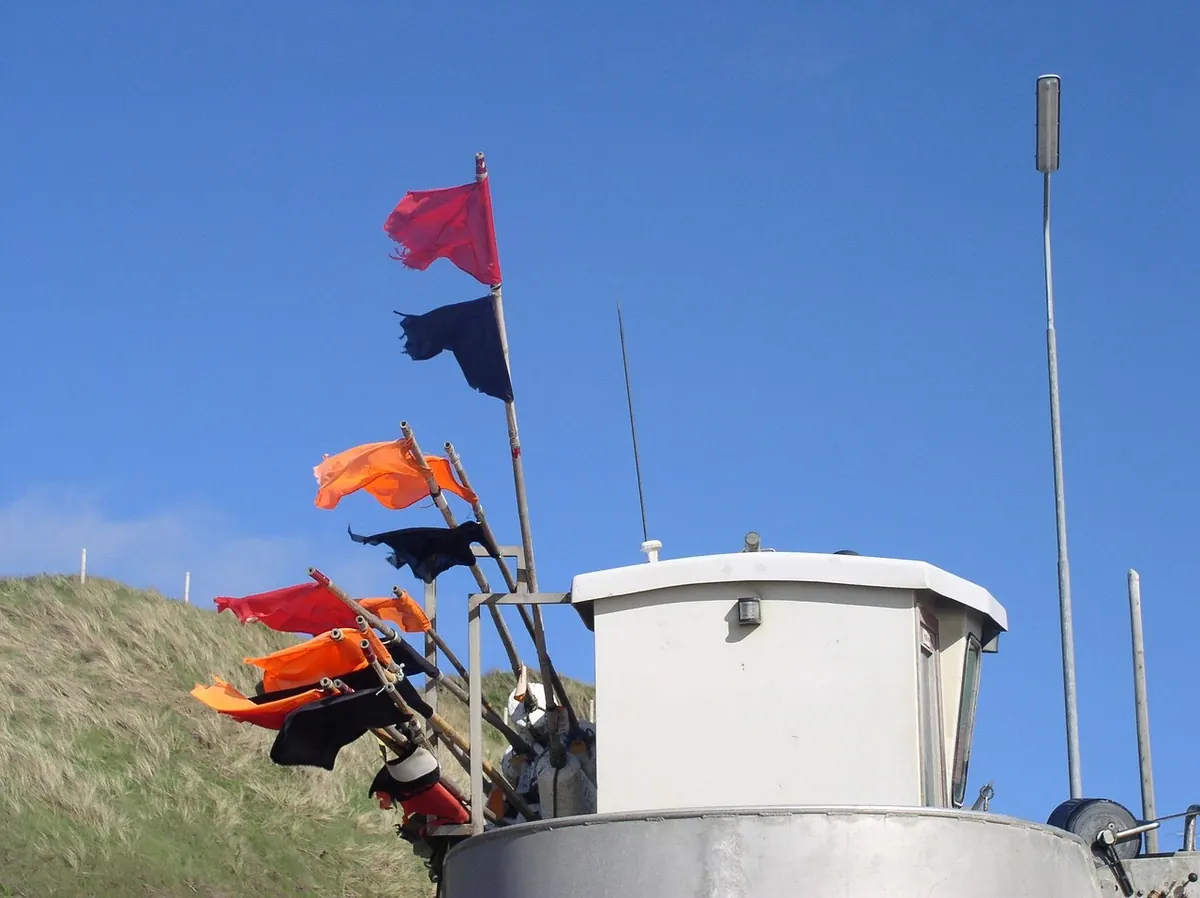
Then read the gear. Nets, floats and engine-driven winches say fishing. Davits and a deck box full of cleaning products say cruising. Dive tanks, a ladder lashed to the rail and a compressor say charter. Registration numbers on the bow and a hailing port lettered across the transom confirm nationality and, sometimes, home waters. Wear patterns are honest too: a boat with abraded gunwales and chipped paint along one side is being worked, not displayed.
A Five-Minute Method for the Quay
- Pick one boat a day. Not five. One.
- Sketch the silhouette in pencil in a small notebook — rough is fine, accurate is the point.
- Note three features only: number of masts, stern shape, engine position.
- Walk around it if you can. Hull shape reads better from the bow and from the stern quarter than from the side.
- Compare it to the boat next door and write down the one difference that decided it for you.
- Return at low tide or on a haul-out day. Hulls on a slipway give away everything the waterline hides.
Two rules of etiquette. Don't step aboard without an invitation, and don't lean on a boat's guardrail to get a better look. Ask the marina office or the owner instead; most people are delighted to talk about their vessel, and a five-minute conversation teaches you more than an hour of squinting.
Reading the Harbor
Identification is really a side effect. What you're building, week by week, is a sense of what a boat is for — why one has a high bow and another a flat stern, why the fisherman's launch never wins a race and never needs to. That instinct makes you better company on a quay, better at choosing a charter, and harder to sell a bad survey on.
Start with one boat tomorrow. Note how it sits, where the paint line falls, what's bolted to the transom. By the end of a season you'll walk the length of the port and know, roughly, what everyone is doing out there. Roughly is plenty. The harbor rewards people who look twice.
Photo: holdmypixels / Pixabay